


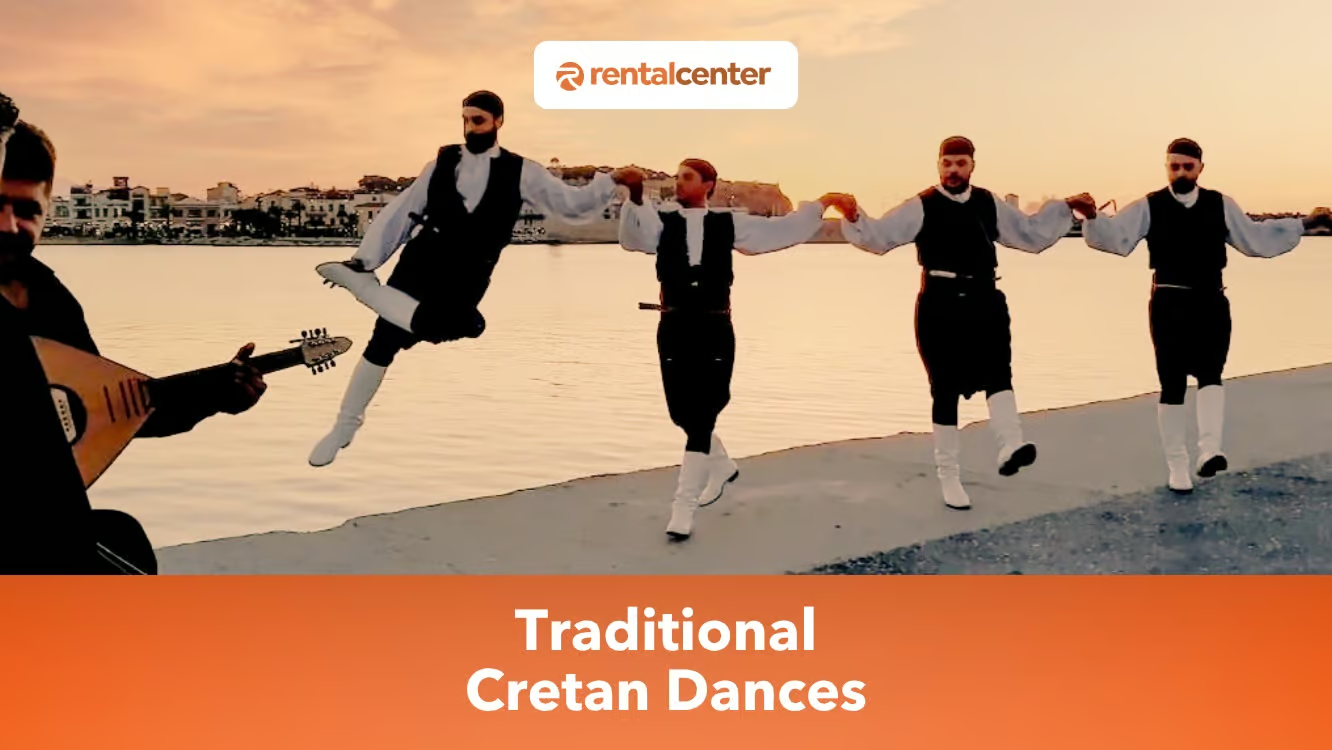
Crete has eight traditional folk dances, each rooted in a distinct region and historical period – from the martial Pentozali of Sfakion to the courtship Sousta of the Dodecanese. Together they form a living archive of Cretan history: resistance against Ottoman rule, Minoan ritual, Byzantine devotion, and the island’s fierce independence. This guide covers all eight dances with their steps, music, costumes, historical origins, and where to watch them performed today.
Cretan dances express the full emotional life of the island – joy, grief, love, and resistance – and have anchored Cretan cultural identity for over three millennia. Along with Cretan music, they give voice to the island’s inner world: performers channel joy, despair, and love through specific step patterns, rhythms, and improvisations passed down across generations.
The historical Minoan dances, particularly the old pyrrhic dance, have influenced many of these dances. Numerous distinct dances with many variants appear across Cretan history, depending on the part of the island and the circumstances that originated or inspired them. The most popular traditional folk Cretan dances are Syrtos (or Chaniotis), Pentozalis, Maleviziotis, Siganos and Sousta. All eight traditional Cretan folk dances remain alive today – performed at panigiria (outdoor village festivals), weddings, and local festivals throughout all four regions of the island.
This article covers the eight main traditional folk dances of Crete based on ethnographic sources, documentation, and first-hand knowledge of Cretan cultural events. Greek terminology is transliterated from Modern Greek; dance step counts and time signatures reflect academic consensus, and regional variations exist across the island.
The 8 Traditional Cretan Folk Dances at a Glance
Crete has eight traditional folk dances, each rooted in a different region and historical period – here is how they compare at a glance.
| Dance | Region | Time Signature | Character | Best Context |
|---|---|---|---|---|
| Syrtos (Chaniotikos) | Chania (statewide) | 2/4 | Ceremonial, stately, military symbolism | Festivals, weddings, panigiria |
| Pentozali | Sfakion / statewide | 8/8 | Martial, vigorous, acrobatic | Cultural events, panigiria |
| Maleviziotis (Kastrinos Pidichtos) | Heraklion / statewide | 2/4 | Most physically demanding, leaping | Dance competitions, festivals |
| Sousta | Crete / Dodecanese | 2/4 | Courtship, pair dance, expressive | Weddings, romantic celebrations |
| Siganos | Rethymno / Heraklion | 2/4 | Slow, proud, processional | Wedding opening, solemn occasions |
| Lassithiotikos Pidichtos | Eastern Crete (Lassithi) | Fast 2/4 | Leaping, regional pride | Eastern Crete festivals |
| Trizalis | Rethymno (Amari) | Varied | Women’s war dance, arms raised | Cultural heritage events |
| Priniotis | Lassithi highlands | Varied | Circle, separating/reuniting, fading | Regional festivals, revival events |
Listed below are the best traditional folk dances of Crete, each described in detail.
- Syrtos. A traditional dance in 2/4 time where dancers form a chain or circle with hands linked, led by a leader who breaks out to improvise. Rules govern the men’s and women’s variations, with the leader doing turns and jumps and passing leadership down the line, symbolizing a captain and troops marching to battle. It is ceremonial and energetic yet modest.
- Kastrinos Pidichtos. Also called Maleviziotis, the most vigorous Cretan dance, with much jumping and leaping. It has 16 steps in 2/4 time, is danced in a circle, and allows the lead dancer to improvise energetically. The name comes from the region near Heraklion where it originated. It may have pagan ritual origins of jumping to drive away evil spirits.
- Pentozalis. A fast signature dance with five basic steps in 8/8 time, danced in an extended circle. It was supposedly created by rebel leader Daskalogiannis for the fifth revolution against the Turks, and it represents that failed but valiant effort.
- Sousta. Pairs face each other, incorporating ancient war-dance elements. A man courts a woman with turns and jumps as she first rejects, then accepts him. Their interplay expresses a love story requiring skill.
- Siganos. A slow walking dance with shoulder clasps and 6–8 steps. Its stately pace evokes Theseus exiting the Labyrinth after defeating the Minotaur. It likely originated under Ottoman rule.
- Lassithiotikos Pidichtos. An energetic leaping dance from east Crete representing the dignity of that region. It is also called Stiako or Gerapetritiko, and it is the most distinctive dance of eastern Crete.
- Priniotis. A faded dance once performed in highlands like Lassithi, where men and women separate and reconnect in a circle.
- Trizalis. A leaping dance from the Amari region of Rethymno. Its name refers to its three jumping steps, and it is performed with raised, bent arms.
1. Syrtos
Syrtos is Crete’s most widely performed folk dance: a circle dance in 2/4 time led by an improvising first dancer, symbolizing the chain of military command. Dancers create a chain or circle with their hands linked, led by a leader who moves away to perform improvisational moves. The adoring Minoan dance of the ceremonial services is performed with this dance.
There are many melodies (musical tunes) that make syrtos particularly intriguing. The”.first Chaniotiko”. as well as the”.second Chaniotiko”. are well-known across Crete. These melodies serve as the foundation for current Cretan”.syrtos”. also known as”.chaniotikos syrto”. (from Chania). It is a ceremonial and political dance, both modest and energetic, that is a part of Cretan life and is performed throughout the island, accompanied by the Cretan lyra and laouto.
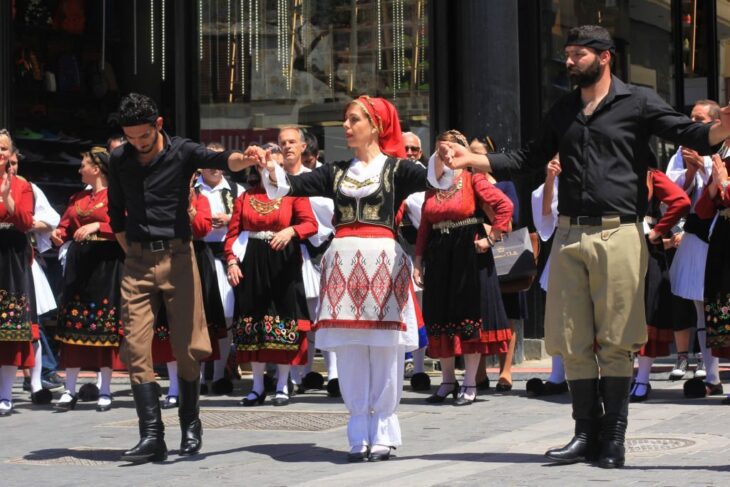
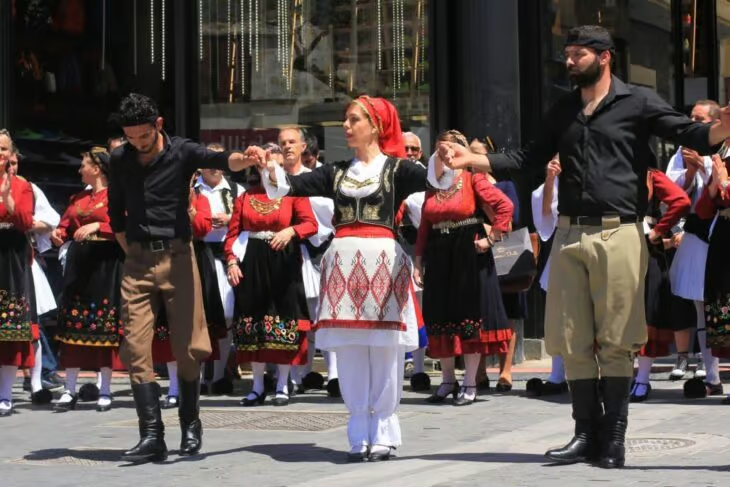
The first dancer improvises, but his twists, waist bends, and”.talimi”. (lifting one foot to the side and tapping it with your hand) are very few, modest, and disciplined in comparison to the others. When only men execute syrtos, specific regulations must be obeyed: the first dancer gives a bandana to the second dancer, and they begin dancing with their hands at the height of their shoulders, whereas the rest of the dancers walk behind the first two, keeping all their hands down.
The”.first dance”. does some improvisational moves during the second turn, and a variety of movements in the third turn. The second dancer holds him for assistance as he leaps in the air to execute the”.talimia”. He then moves from the front to the back of the dancers. The second becomes first, then the third, and so on, until everybody is first. This entire process represents the captain and his second-in-command”.draggin”. the fighters to the battlefield. In the same way that a commander issues orders, the second-in-command observes and learns while the rest of the team executes them. In the event of an accident or death, the second-in-command assumes command and is assigned a new deputy.
In this dance, it is highly typical for the Cretan woman to start dancing first. She alters her steps and executes”.tsakismat”. (waist bends) and spins, but she avoids overdoing them or performing jumps and”.talimi”. like men do. She emphasizes her dancing expression, which is why she uses a few figures, opposite to what a man would do. When only ladies dance”.syrto”., they frequently break the circle, coming in front and doing turns over themselves with their hands free before reverting to their original position. The traditional Cretan uniforms worn by ladies at festivals and other celebrations are distinctive in design.
2. Kastrinos Pidichtos or Maleviziotis
Maleviziotis (also called Kastrinos Pidichtos) is the most physically demanding Cretan dance: 16 steps in 2/4 time with leaping movements, originating from the province of Malevizi near Heraklion. It involves a lot of jumping – sixteen steps in total, eight in the front and eight behind. The dance unfolds in those sixteen steps, eight advancing and eight retreating, driven by the 2/4 rhythm of the Cretan lyra. The laouto carries the harmony, while the orchestra plays the lyra, violin, or ascomantura (a bagpipe-like instrument). A mandolin is frequently used as well. This is another circle dance in which the participants clasp hands with their palms at shoulder height and their elbows bent.
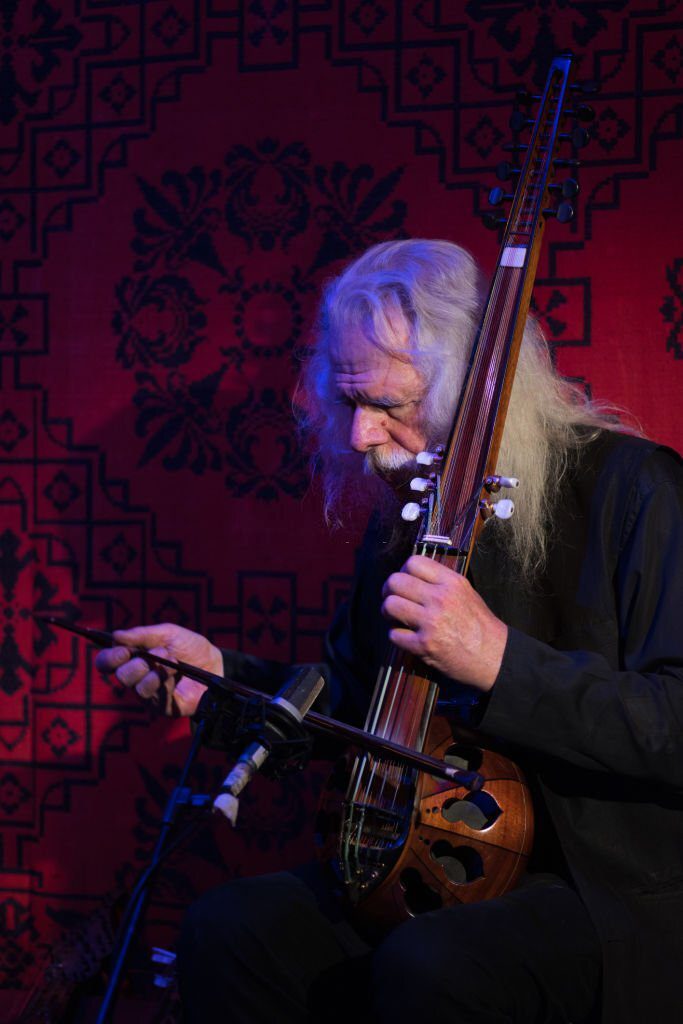
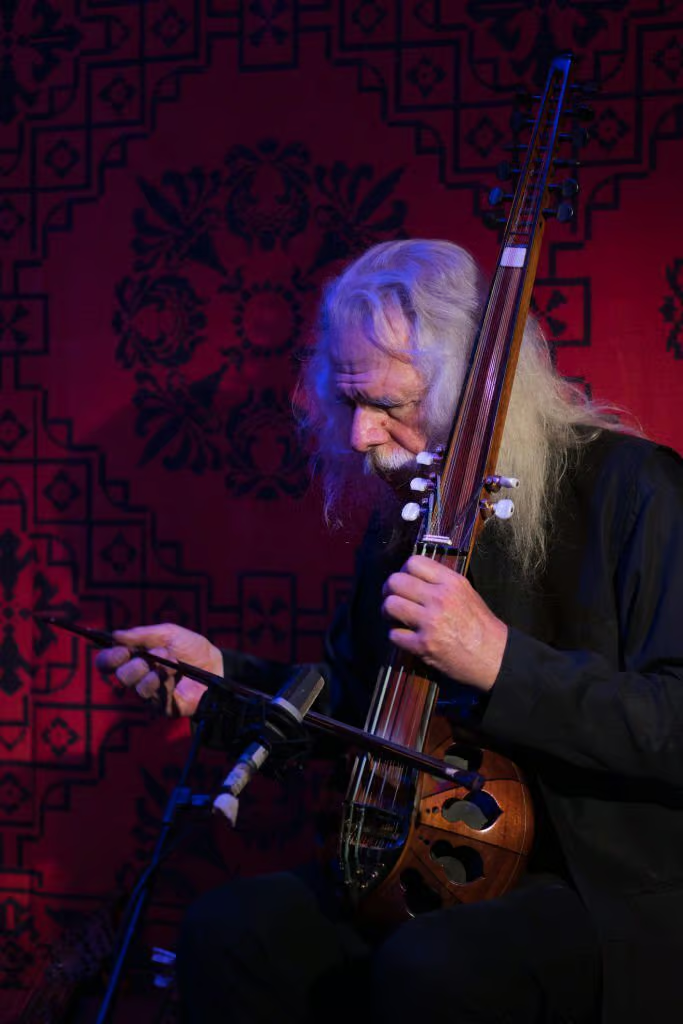
It necessitates a great deal of energy and grace, and it permits the first dancer to perform freely. Many people see it as the most elegant and spectacular Cretan dance. The dance was created in the province of Malevizi (thus the name Maleviziotis), which is situated adjacent to Heraklion, or Castle as it was once known, and it gets its other name”.Kastrino”. from there.
The dance is known as Kastrini Sousta in Chania. During the 1920s, the dance spread throughout the island. According to experts, this isn’t always a battle dance. One theory is that it was a pagan ritual in which the dancers’ hops and leaps fell to the ground and drove evil spirits away.
3. Pentozalis
Pentozali is Crete’s martial signature dance – five leaping steps in 8/8 time, first performed on October 10, 1769 in Anopolis, Sfakion, to declare the fifth Cretan revolt against the Ottoman Empire. It is practiced all throughout the island, and it is quite vibrant and fast-paced, especially near the finish. The standard steps are five in order (thus the name, pente = five, zalos being the Cretan word for step, with a play on the term”.dizz”.) and are performed to an 8-beat rhythm. In an extended circle, the dance is usually performed with arms on the shoulders of the people around you, with the lead dancer improvising acrobatic leaps to the direction of the lyra player.
Daskalogiannis and his tribal chiefs from Sfakion created the Pentozali – choreographing it as both a battle-preparation ritual and a declaration of the fifth Cretan revolt against the Turks. Pentozali advances in five structured steps performed to an 8/8 beat, each set representing one of the uprisings against Ottoman rule.
It was meant to be the fifth ‘jump’ against the Turks. Sadly, the revolution failed and Daskalogiannis died tragically, but Pentozalis lives on as a reminder of his attempt. Today it is performed throughout Crete at festivals and cultural events, accompanied by the Cretan lyra and laouto.
4. Sousta
Sousta is Crete’s courtship dance – originally a war dance related to the ancient Pyrrhic dance, it evolved into a pair dance where a man courts a woman through turns, jumps, and expressive footwork. Originating from Crete and tracing back to Ancient Greece, it began as a war dance similar to the Pyrrhic dance. Around 300 AD, it evolved into an erotic dance performed by both men and women. Known for its quick pace, Sousta is often performed at weddings, symbolizing love and courtship. It starts in a circle with dancers holding hands, then transitions into pairs with small, rhythmic steps and up-and-down movements, giving it the name”.soust”., meaning”.sprin”.. Men and women are placed in a semicircle and alternate movements before splitting into pairs. The dance essentially recounts a love and temptation story. The man makes attempts toward the woman in a variety of ways (hugs, turns, and little jumps), which she first rejects. But she gradually gives in, and they eventually become one. The story is told through the performers’ movements and expressions, and the interplay between them requires a high level of skill and coordination.
Traditionally accompanied by the Cretan lyra and laouto, the music now includes Western instruments like the violin and guitar. Sousta remains popular across Greece, especially in Crete, the Dodecanese and Aegean regions.
5. Siganos
Siganos (meaning”.slo”. in Greek) is an 8-step circle dance that Cretans danced safely at Ottoman feasts, its helical formation symbolizing Theseus’ path out of the Labyrinth. Dancers form a circle, holding each other’s shoulders, and perform either 8 steps in Rethymno or 6 in Heraklion, following a 2/4 meter at a walking pace. The dance originated during the Ottoman occupation, allowing Cretans to dance safely at Turkish feasts. The helical circle is believed to represent Theseus’ exit from the Labyrinth. Siganos anchors the opening of Cretan weddings and formal ceremonies, its slow circle setting the tone before the gathering accelerates into the faster Pentozali. It remains culturally significant, especially among brides in central and eastern Crete. It is performed by both men and women with a smooth, proud style and upright posture, and it features at weddings, festivals, and other events across the island.
6. Lassithiotikos Pidichtos (Stiako / Gerapetritiko)
Lassithiotikos Pidichtos – also called Stiako or Gerapetritiko – is the defining leaping dance of eastern Crete, expressing the dignity and fierce independence of the Lassithi region. It is performed throughout eastern Crete and is also known as Stiako (from the town of Sitia) or Gerapetritiko (from Ierapetra). The dance belongs to the”.pidichto”. (leaping) family, featuring dynamic, high-energy jumps that distinguish eastern Cretan dance from the more stately forms of the west.
Dancers form a circle or semicircle, with the lead dancer performing acrobatic improvised leaps while holding the hand of the second dancer for support. The music is played on the Cretan lyra and laouto at a fast, driving tempo. Lassithiotikos Pidichtos is regularly performed at panigiria and festivals across Lassithi and Ierapetra, and is taught in local dance schools as a cornerstone of eastern Cretan cultural identity.
7. Priniotis – The Fading Dance of Lassithi
Priniotis is one of Crete’s fading dances – a circle dance from the highlands of Lassithi where men and women separate and reunite to the distinctive”.Braimianos-Prinioti”. melody. Traditionally performed in a circle, men and women separate and reconnect during the dance. It is described as a”.faded danc”. as it is less commonly performed today. The steps involve”.three steps forward and a little turn”. The music is associated with the”.Bra(i)mianos-Prinioti”. tune, one of two well-known tunes in Lassithi. The dance has variations within the Lassithi area. Priniotis represents part of the dance heritage of Lassithi, though it is less known compared to other Cretan dances, and the limited surviving details suggest it may be a localized or less-performed tradition.
8. Trizalis – The Women’s War Dance
Trizalis is unique among Cretan dances as a women’s war dance: performed with arms raised and elbows bent in the Amari valley of Rethymno, its three jumping steps (tri + zala) honor women’s role in Cretan resistance. A Greek folk dance from Crete belonging to the”.leapin”. family, it is also known as”.Κουρουθιανό”. (Kourouthianos). It is performed in the Rethymno prefecture, particularly in the Amari district’s Ampadia area. The name derives from”.Tr”. (three) and”.zal”. (jumps/steps). Trizalis is a complicated dance, with dancers performing it with their hands up and elbows bent. In Cretan tradition, it is considered the women’s war dance, revealing women’s participation in war and their support for fighters. Trizalis is similar to the Pidichtos dance and, while originating in Crete, has spread across the Greek islands. It represents part of Crete’s rich cultural heritage, reflecting its history through movement and music.
The Music Behind Cretan Dances
Every Cretan folk dance is directed by the lyra player – the musician who sets the pace, signals the lead dancer when to improvise, and brings the dance to a close.
The Cretan lyra is a three-stringed upright fiddle, played vertically on the knee. Unlike the Western violin, it is bowed from the side of the string rather than above, producing the characteristically bright, resonant tone of Cretan music. The Cretan lyra is the primary identity instrument of Crete and appears in all eight traditional dances.
The laouto (Cretan lute) provides harmonic and rhythmic accompaniment, played in a percussive strumming style. The lyra and laouto duet forms the inseparable core of all traditional Cretan dance music.
Other instruments appear in specific dances or regions:
- Violin – historically dominant in eastern and western Crete; now less common than the lyra.
- Ascomantura – a Cretan bagpipe, appearing in Maleviziotis and some western Crete dances.
- Mandolin – occasionally used in Maleviziotis performances.
Mantinades: Improvised rhyming couplets (mantinades) are frequently sung during or between dances, commenting on love, heroism, or daily Cretan life. They are one of the defining oral traditions accompanying Cretan music and dance.
Traditional Cretan Dance Costumes
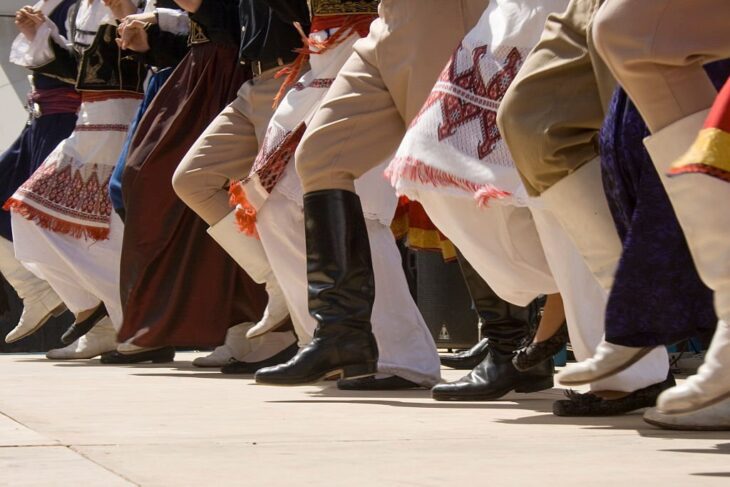
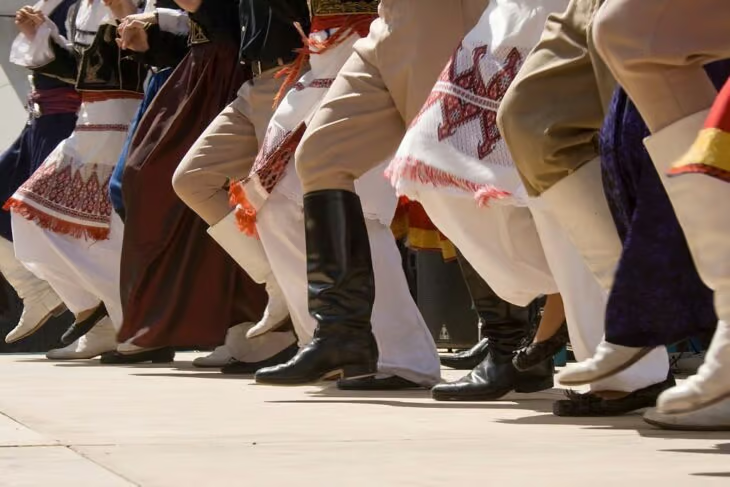
Cretan male dancers traditionally wear the vraka – black breeches tight at the waist and loose at the hips – paired with leather stivania boots, a vest, and a black headscarf (sariki), all specifically designed to allow the acrobatic jumps of dances like the Pentozali and Maleviziotis.
Men’s traditional costume:
- Vraka – wide black breeches, tight at the waist and thighs but extremely loose around the hips and seat, allowing freedom for high jumps and kicks.
- Stivania – tall black leather boots, traditionally hand-stitched by Cretan cobblers.
- Vest (sigouni or kondorevithkouri) – an embroidered waistcoat, often black or dark blue.
- Sariki – a black fringed headscarf wrapped tightly around the head, a symbol of Cretan male identity.
Women’s traditional costume:
- A long embroidered dress, typically in dark colors with gold or silver embroidery, reaching the ankles. This length traditionally limited women’s jump height in dances like the Syrtos and Pentozali, giving rise to their more restrained but expressive movement style.
Where to Watch Traditional Cretan Dances
The best places to watch authentic Cretan folk dances are the panigiria – traditional outdoor festivals held in village squares throughout summer (June–September) – where local dance groups perform all eight traditional forms free of charge. These public events feature live music by local lyra and laouto players, food and wine, and performances by local cultural associations (syllogi).
Key locations and opportunities:
- Heraklion: The Heraklion Summer Arts Festival and local church nameday celebrations (especially in August and September) regularly feature Cretan dance performances.
- Chania: The Chania Carnival and the village festivals of the Sfakia region are known for particularly authentic Pentozali performances.
- Rethymno: The Rethymno Renaissance Festival (July–August) includes traditional Cretan music and dance.
- Lassithi: Village festivals on the Lassithi Plateau regularly feature Lassithiotikos Pidichtos and Priniotis performances.
Dance schools (horos): Most towns in Crete have a local cultural association that offers Cretan dance classes, typically open to residents and sometimes to interested visitors. Ask at your hotel or the local municipality office for the nearest syllogos (cultural association).
Tavernas and tourist shows: Many traditional Cretan tavernas and resorts organize weekly Cretan dance nights, though these are more theatrical than the village panigiria.
What are Crete’s Ancient Dances?
Cretan dance traditions trace back to at least the 2nd millennium BCE, with four ancient dances – the Labyrinthical Dance, the Dance of the Kourites, the Pyrrhic Dance, and Ariadne’s Dance – documented in Bronze Age frescoes and Homer’s Iliad. Listed below are Crete’s ancient dances.
- Labyrinthical Dance. The Labyrinthical Dance, mentioned by Homer and dated to the Bronze Age, is believed to have Minoan origins. It refers to an ancient Minoan dance tied to the myth of Theseus and the Labyrinth, linked to Theseus’ defeat of the Minotaur and the celebratory dance performed with his companions after escaping the Labyrinth. Homer describes this dance in the Iliad as performed on Delos. The dance was likely circular, mimicking the Labyrinth’s winding paths. In modern times, the Siganos dance, forming a helical circle, may echo this ancient dance. Though the original steps are unknown, the dance’s influence persists in Cretan cultural practices.
- Pyrrhic Dance. The Pyrrhic Dance, also known as Pyrrhichios, was an ancient Greek war dance with Dorian origins, primarily used for military training. The dance imitated combat movements by combining both offensive and defensive actions. It was performed to the sound of the aulos, with dancers armed and executing quick, agile moves to mimic battle scenarios. The dance was particularly popular in Sparta, where boys learned it from a young age. In Athens, it was part of gymnasium training and featured prominently in Panathenaic competitions. Over time, the Pyrrhic Dance evolved into a theatrical performance, often depicting mythological themes. Although it eventually declined, the dance left a lasting influence on later Greek dances, including Cretan martial-inspired forms.
- Dance of the Kourites. The Dance of the Kourites, an ancient Cretan war dance, is deeply tied to the myth of Zeus’s birth. According to the story, when Rhea hid the infant Zeus from Cronos on Mount Dicte, the Kourites performed this dance, whirling with shields and clashing swords to mask the baby’s cries. This ritual, connected to the cult of Zeus, symbolized his seasonal rebirth. The dance involved armored male dancers and rhythmic foot stamping, accompanied by drums. It significantly influenced later Greek war dances, such as the Pyrrhic dance. Strabo noted it as one of the oldest dances, representing a blend of religious and martial traditions in ancient Crete.
- Ariadne’s Dance. Ariadne’s Dance, an ancient Cretan ritual, is linked to the myth of Theseus and the Labyrinth. After Theseus defeated the Minotaur and escaped with Ariadne’s help, he and his companions celebrated by performing this dance. Homer references it in the Iliad, mentioning a”.dancing floor of Ariadn”. created by Daedalus in Knossos. The dance symbolized life’s intertwining paths and the overcoming of challenges, thus is performed in a circular formation. Archaeological evidence supports the existence of circular dance rituals in ancient Crete, and modern Cretan dances like the Siganos may preserve elements of this tradition.
What is the history of the Ancient Crete Dances?
The history of ancient Cretan dances is deeply rooted in the island’s cultural heritage, with origins dating back to the 2nd millennium BCE. These dances were influenced by the Minoan civilization, held significant religious importance, and were often performed as part of worship. Circular dances were common, with ritual male and female versions performed in specific architectural spaces.
Notable examples include the”.Labyrinthical Danc”., linked to the myth of Theseus, and the”.Dance of the Kourite”., associated with the birth of Zeus. Crete is also considered the birthplace of the Pyrrhic war dance. Archaeological findings, such as circular platforms, seals, and figurines, depict these ancient dances.
How were Minoan dances depicted in the frescoes of Knossos?
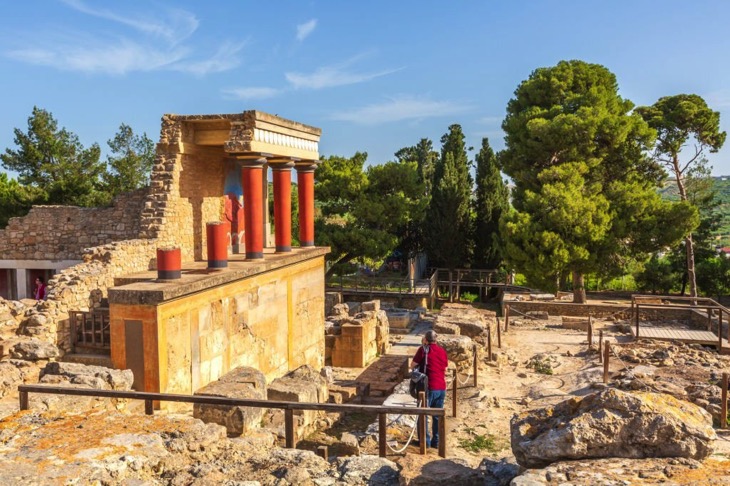
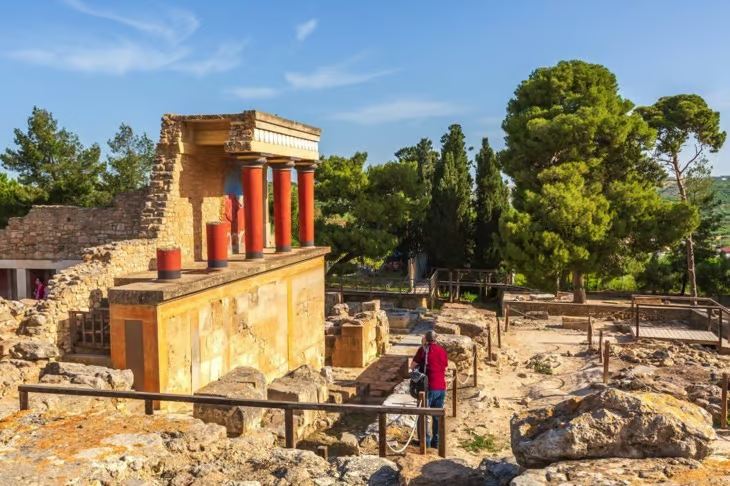
The frescoes of Knossos Palace provide insights into Minoan dances, depicting circular formations that highlight their cultural importance. Women are prominently shown as dancers, often in sacred groves with male spectators. The figures, portrayed with natural poses and fluid movements, reflect a connection to nature. Dance scenes, tied to rituals, appear in religious contexts, with dancers in detailed attire, offering glimpses of Minoan fashion. Musicians playing instruments like the lyre suggest the integration of music. The frescoes place dance in sacred spaces, emphasizing its spiritual role, and often include nature elements, showcasing the festive, communal significance of dance in Minoan life.
How important is tradition for local Cretans?
Local traditions are deeply ingrained in the cultural fabric of Crete and hold great importance for Cretans, serving as a vital bridge between the past and present. The traditions of Crete reflect its rich historical and cultural influences, including the iconic Minoan civilization, which gives Cretans a profound sense of cultural identity and continuity.
Various festivals on the island showcase long-held traditions in music, dance, art, and cuisine, allowing both locals and visitors to fully immerse themselves in authentic Cretan culture and heritage.
Religious traditions like Easter and Epiphany carry deep cultural significance, bringing together families and communities in celebration. Food traditions using fresh local ingredients also embody the spirit of Cretan culture and geography, with traditional dishes that connect people to the island’s long history.
Art forms like pottery-making and embroidery represent cherished Cretan crafts honed and passed down through generations. Music and dances such as the mantinades folk songs and pentozali circle dances are communal artistic expressions of the Cretan soul. Even life-cycle events like weddings and baptisms incorporate customary rituals that reflect the cultural values and traditions of the island.
Upholding these age-old traditions allows Cretans to proudly preserve their cultural identity and share it with visitors from around the world.
Frequently Asked Questions
Here are answers to the most common questions about Cretan folk dances, their history, costumes, and where to see them performed today.
What is the most popular traditional dance of Crete?
The Pentozali is Crete’s most iconic dance and is performed across the entire island, though the Syrtos (Chaniotikos) is the most widely danced at weddings and social gatherings.
What instruments are used in Cretan dance?
The Cretan lyra (a three-stringed upright fiddle) and the laouto (lute) are the core instruments. The violin, ascomantura (Cretan bagpipe), and mandolin also appear in specific dances and regions.
What do Cretan dancers wear?
Men wear the vraka (black breeches), stivania (leather boots), an embroidered vest, and a sariki (black fringed headscarf). Women wear long embroidered dresses in dark colors with gold or silver detailing.
Where can you watch traditional Cretan dances?
The most authentic place is at a panigiri – a village festival held in a square between June and September – where local cultural associations perform all eight dances free of charge. Tavernas and resorts also stage Cretan dance nights.
Can tourists participate in Cretan dances?
Yes. At panigiria, visitors are usually welcomed to join the circle dances such as Syrtos and Siganos, and some local cultural associations (syllogi) offer dance classes open to visitors.
Are Cretan dances still performed today?
Yes. All eight traditional dances remain active at weddings, festivals, and panigiria across the island, and they are taught in local dance schools to new generations.
